
Blog
Why Older Everett Garages Fight the Cold
Most Everett houses went up between 1968 and 2000, before stricter insulation codes took hold - that gap shows up in doors that sweat and stick in the cold.
What the Weather Here Does to It
Everett sits in a cold-moderate climate band, which doesn't sound dramatic until you own a garage door built before 1990. Steel panels from that era are mostly single-wall - no foam core, no thermal break - so they move with the temperature more than a modern door does. On a cold morning the panel contracts just enough to tighten against the weatherstrip, and the opener has to work a little harder to break it loose. Do that every winter for three decades and you start seeing hairline cracks at the panel seams, stiff rollers, and torsion springs that lose tension faster than the door's rated life would suggest.
It's not that the cold is extreme here. It's that these doors were never built with cold cycling in mind the way a newer insulated door is. The moisture side matters too - condensation forms on the inside face of an uninsulated steel door overnight, and if the garage isn't vented well, that moisture sits on the hardware. Rust on springs and hinges in a house built in 1985 is common, and it's almost always a weather-and-age problem, not a defect.
The Situation
Housing in this service area mostly went up between 1968 and 2000, with the median build year landing around 1990. That's true close to the water in places like Port Gardner and Bayside, and it's true a bit further out in Pinehurst-Beverly Park, View Ridge Madison, and Northwest Everett. Across the 36 named areas this company works in, the bulk of the stock is 1980s and 90s construction - not pre-war, not brand new.
That matters for garage doors specifically because insulation requirements for residential doors tightened up after most of this housing was built. A door installed in a 1985 house went in under a different, looser standard than what gets installed today. So the original door - if it's still there - is a single layer of steel with a vinyl weatherstrip and nothing else between the garage and the outside air. Plenty of these original doors are still in service decades later, which is a testament to how simple they are, but it also means a lot of households here are running hardware that predates the insulation rules by a wide margin.
The Common Mistake
The mistake we see most is someone buying a foam insulation kit, lining the inside of an old steel door with it, and calling the problem solved. It helps a little with noise and a little with temperature swing inside the garage, but it doesn't touch the actual issue: the door's steel skin is still thin, the seams still flex in the cold, and the weatherstrip at the bottom and sides is usually original and brittle by now. You end up with a slightly warmer garage and the same hardware problems underneath.
The honest answer is that a 1980s or 90s single-wall door with worn-out rollers and a tired spring usually isn't worth retrofitting piece by piece. Past a certain point - cracked panels, a spring that's been adjusted more than once, a track that's bent from age - the labor and parts to patch it approaches the cost of a new insulated door that actually meets a modern standard. We'll tell you straight when a repair is the better call and when it isn't; we don't push a replacement on a door that still has life in it.
Season by Season
In the cold months, the main thing that goes wrong is tension and seal failure - a spring that's been slowly weakening for years finally lets go on a cold morning, or a bottom seal that's cracked all summer finally lets a draft and standing water through. Houses from the 1968-2000 era feel this first because the original hardware is often still in place and it's thirty-plus years old.
Through the wetter stretch of the year, condensation on uninsulated steel panels is the bigger issue - surface rust at hinge points and track bolts, especially in garages with poor airflow. That's a slow problem, but it adds up over a few winters.
In the warmer months, it's worth doing the inspection you didn't do in January: check the bottom seal, check for rust at the hinges, and listen for a spring that sounds different than it used to. Doing that check in summer, before the cold cycling starts again, is the one thing that actually gets ahead of this instead of reacting to it.
Questions
Common questions
Is my garage door too old if my house was built in the 1980s?
Not necessarily too old to use, but it was likely built under a looser insulation standard than doors sold today. If the panels are still flat, the seams haven't cracked, and the spring hasn't failed, it can keep running. We'd look at the hardware condition more than the age on paper.
Will adding foam insulation to my old door fix the cold problem?
It helps with noise and takes some edge off the temperature swing, but it doesn't fix worn seals, thin steel seams, or tired springs - the parts actually driving most of the problems on a door from this era. Think of it as a minor add-on, not a repair.
Why did my spring break in the winter and not some other time?
Steel contracts in the cold, which adds load right at the moment a spring that's already lost some tension is weakest. It's not that cold breaks springs on its own - it's the combination of age, the door's original lower-standard hardware, and winter temperature swings doing the last push.
Recommendation
You Might Also Like
More garage door guides for Everett homeowners.
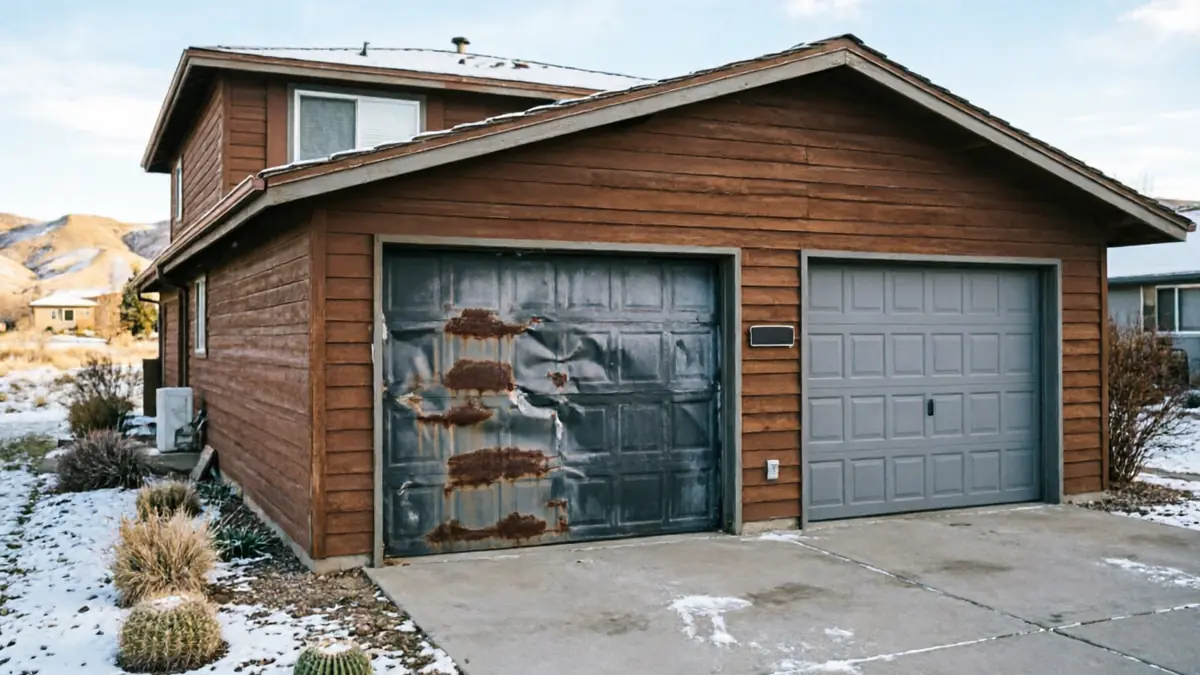 What to Know Before You Replace a Garage Door in Everett
A guide for Everett, WA homeowners on replacing a garage door, built around this area's 1968-2000 housing stock and cold, damp Pacific Northwest climate.
What to Know Before You Replace a Garage Door in Everett
A guide for Everett, WA homeowners on replacing a garage door, built around this area's 1968-2000 housing stock and cold, damp Pacific Northwest climate.
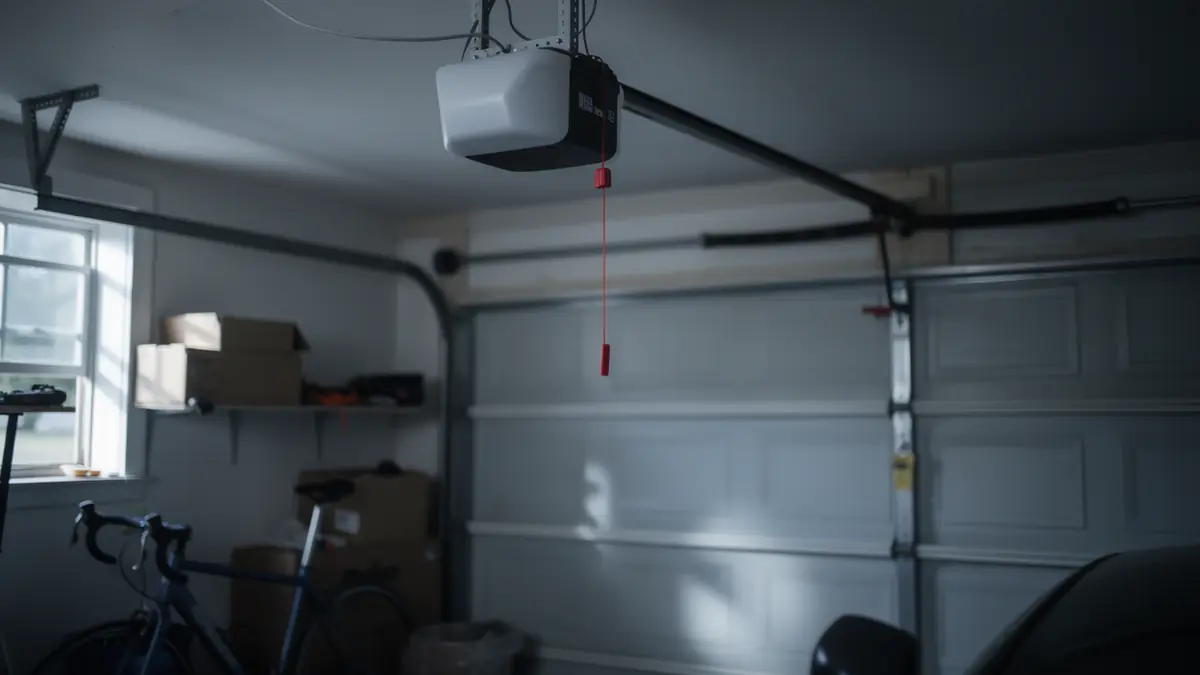 Openers and Power Cuts in Everett Homes
How Everett's cold-moderate climate and 1968-2000 housing stock affect garage door openers during power cuts, plus what to check before winter.
Openers and Power Cuts in Everett Homes
How Everett's cold-moderate climate and 1968-2000 housing stock affect garage door openers during power cuts, plus what to check before winter.
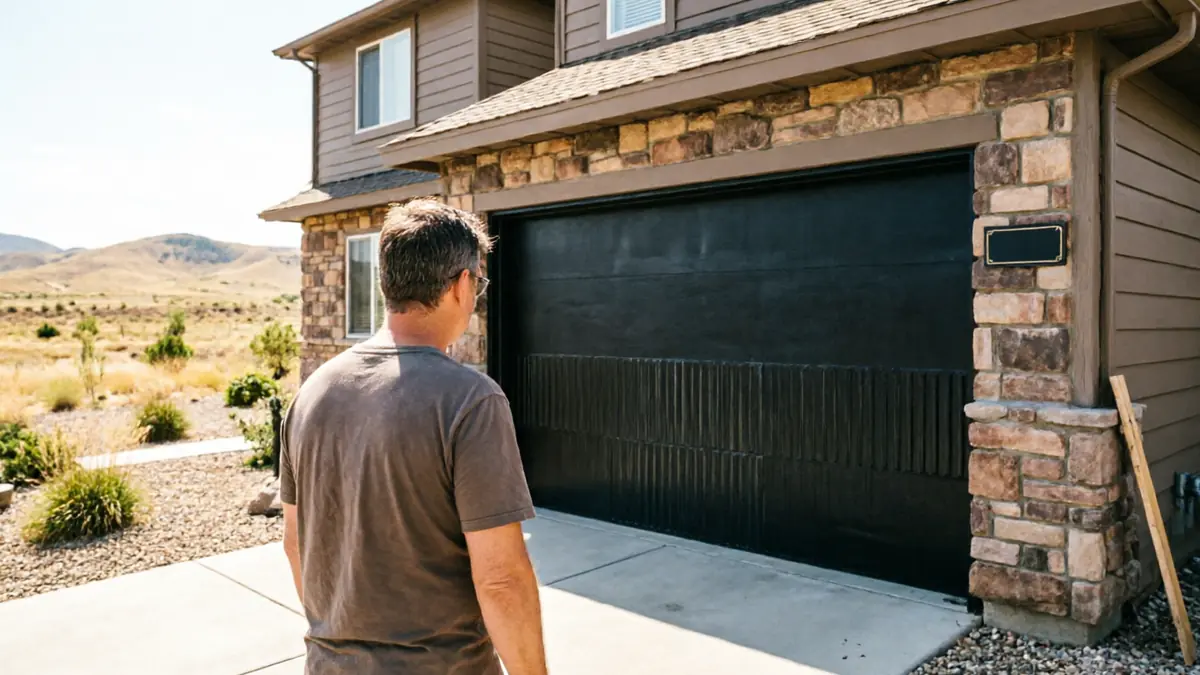 What Everett's Climate Does to Your Garage Door Seals
Everett homes built mostly between 1968 and 2000 lose heat fast through worn garage door seals.
What Everett's Climate Does to Your Garage Door Seals
Everett homes built mostly between 1968 and 2000 lose heat fast through worn garage door seals.
Ready when you are
Need a garage door sorted in Everett?
Everett Garage Door Pros repairs and installs garage doors, springs and openers in Everett, WA and the surrounding area.