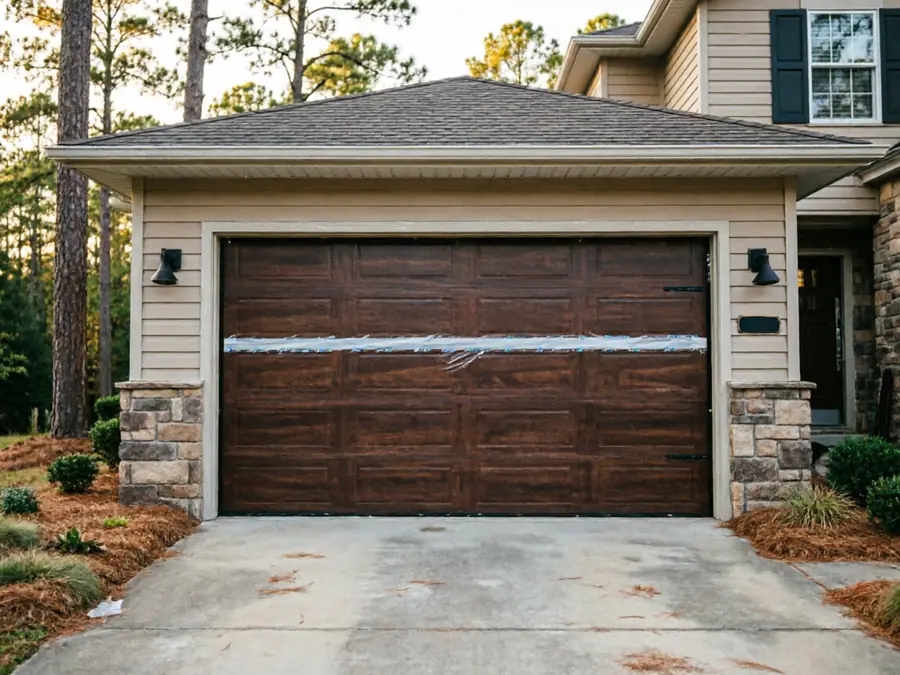
Housing in this service area was mostly built between 1968 and 2000, with the median landing around 1990 - that's true from the close-in neighborhoods like Bayside and Northwest Everett out through areas like Silver Firs and Machias. Builders in that stretch framed openings for single-layer, uninsulated steel doors because that's what the market offered then. Those doors weren't built for a 25-to-35-year service life in a cold, moderate climate with damp winters, and most of them are well past it now. The symptom shows up as warping, not just wear: a steel skin with no insulation expands and contracts with temperature swings every winter, and over enough seasons that stresses the seams and the panel bonding. Garages in this climate band also see enough standing moisture at the base of the door that bottom panels corrode from the inside out, even when the paint on the surface still looks fine. Because so much of the regional stock - across the 36 named areas we serve - dates from this same two-to-three-decade window, we see the identical failure on streets five miles apart: original door, original torsion hardware, same rot pattern at the bottom panel. It's not bad luck. It's the age of the housing stock meeting the weather it was never insulated against.