
Panel damage is rarely urgent
A bent or cracked panel on a 1990s steel door isn't usually an emergency - the door still opens and closes, it just doesn't seal or look right. That buys time to get the right panel rather than whatever's on the truck.
Mukilteo, Everett
Mukilteo homes built around 1990 mostly carry steel sectional doors in standard 8 and 9-foot panel runs. Here's what fails first and what a replacement panel costs.
Local causes
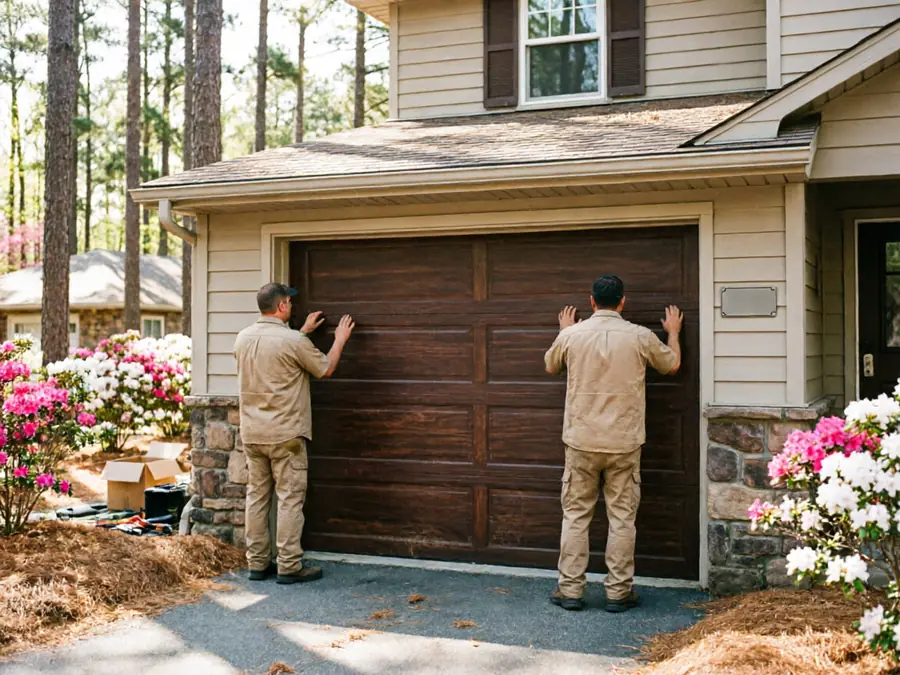
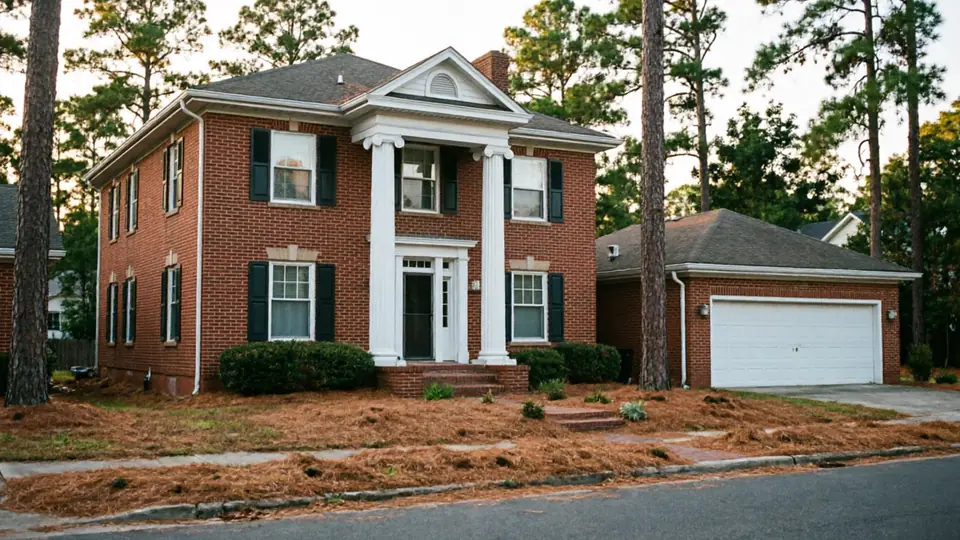
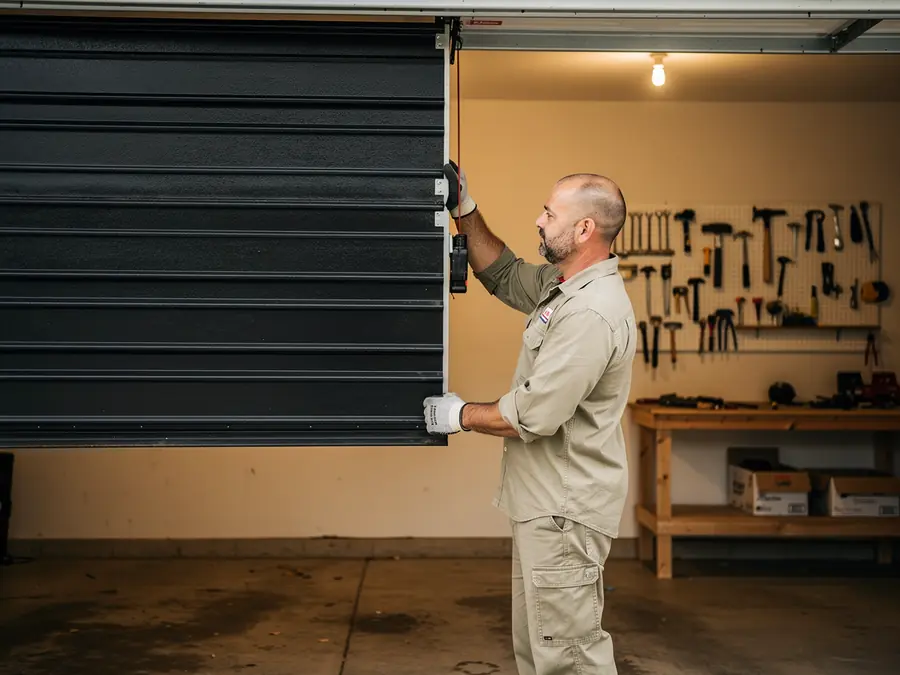
Most garage doors in Mukilteo went up around 1990, which puts the bulk of the housing stock into the steel sectional door era rather than the older wood-panel doors you'd find in a town built decades earlier. These are built in standard 8-foot and 9-foot wide, 7-foot tall runs, sectioned into four or five horizontal panels, usually raised-panel steel with a baked enamel finish and light insulation behind a thin interior skin. That skin is the weak point. By 1990, builders were using lighter-gauge steel than what came before, and over thirty-plus years that steel dents, rusts at the bottom panel where water sits, and delaminates where the foam core separates from the face. A single bottom panel usually takes the worst of it, from a mower, a car bumper, or just years of moisture sitting against the weather seal. You don't replace the whole door for one bad panel on a door this age unless the track or spring system is also shot - but matching the original panel profile gets harder the older the door gets, since manufacturers change panel designs every few years.
Downtime
We run out of Everett, about 6 miles from Mukilteo, so there's no local branch sitting on stock for this town.
A bent or cracked panel on a 1990s steel door isn't usually an emergency - the door still opens and closes, it just doesn't seal or look right. That buys time to get the right panel rather than whatever's on the truck.
If the damaged panel has knocked the door out of square or jammed a roller in the track, that's a different situation and worth a same-trip look, since a door binding on its track can pull the opener motor or snap a cable next.
Symptoms
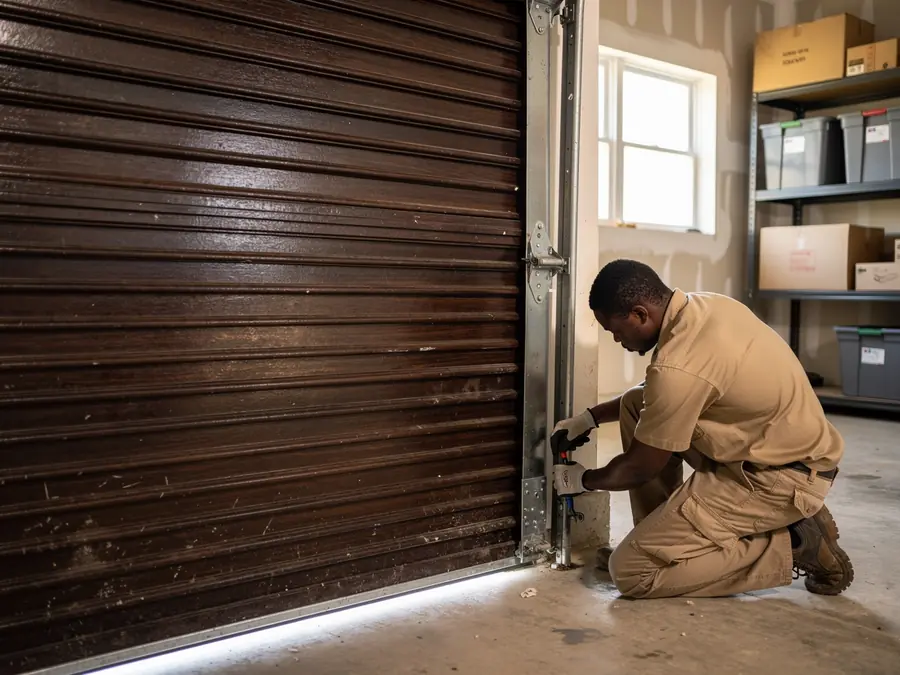
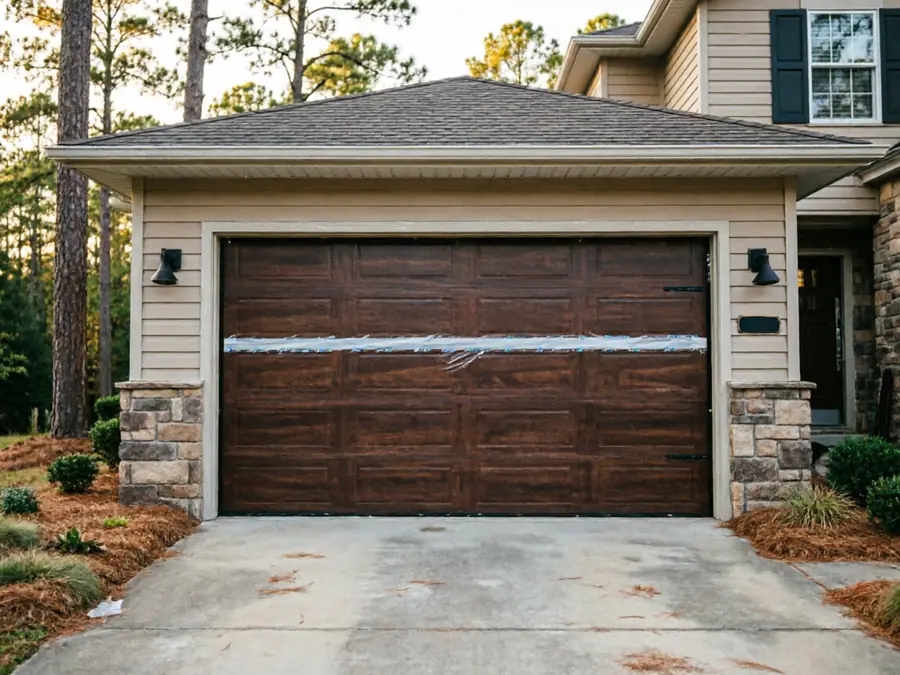
The giveaway on these doors is usually a visible dent or crease across one horizontal section, most often the bottom panel, sometimes with the paint cracked along the fold line. On the lighter-gauge steel common to 1990s builds, a impact that would just scuff a heavier older door leaves a permanent bow here. You'll also see the panel start to separate at the seam where it meets the next section up, letting daylight or weather through at the joint. If the door still tracks straight and the opener still runs smoothly, it's a panel problem, not a spring or track problem, and that keeps the job simpler and cheaper.
On the truck
Panel matching on a door this age depends entirely on who made it and what series. Steel sectional doors from the late 1980s and early 1990s came in a handful of common panel widths and rib patterns, and a fair number of them still have parts available because that era's hardware was widely produced and widely used across this part of the state.
We'll pull the door's model and section size before quoting, because a mismatched panel profile looks worse than the dent it replaced.
One honest limit: if the original manufacturer has discontinued that specific panel profile, we're looking at a full door replacement instead, not a patch - we won't try to force a close-enough panel onto a door where it'll show.
Pricing
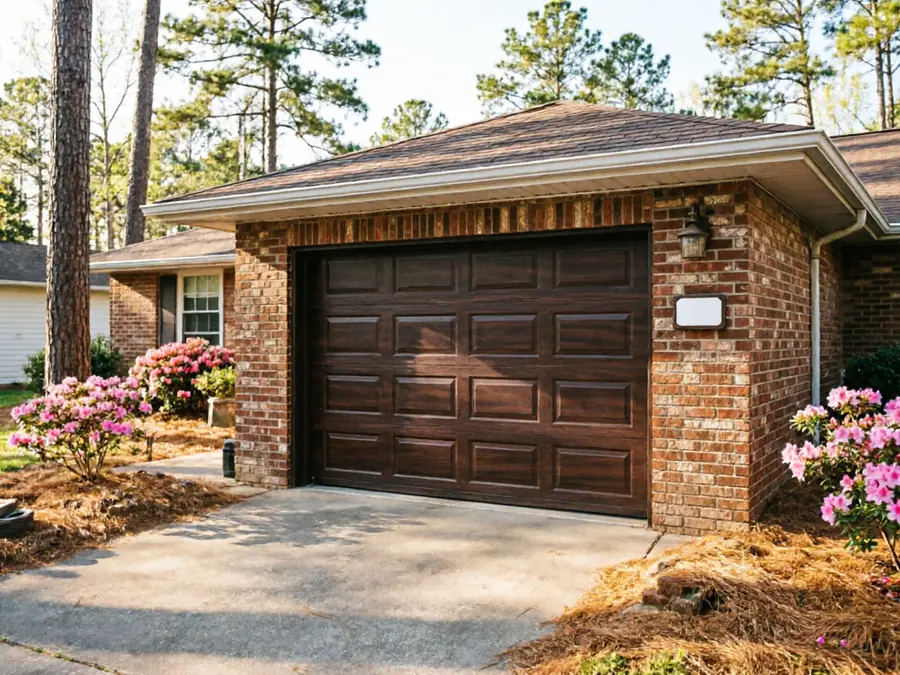
Cost on a panel job depends on whether it's a single section or a run of two, whether insulation needs replacing with the skin, and whether the color needs matching against a faded original. We don't have a flat number to post here, since pricing turns on the specific door and panel once we've seen it - but it's a smaller job than a full door swap, and we'll say so upfront if replacement makes more financial sense than chasing a discontinued profile.
DIY or pro
A single panel swap on a sectional door is within reach for someone comfortable with hand tools, provided the replacement panel is an exact match and the door uses a torsion or extension spring you're not touching in the process. The parts most homeowners get wrong are the end caps and the hinge spacing between panels - get those off by even a little and the next panel binds against the track. If the dent is on a panel adjacent to the spring-loaded hardware, or if the door's out of square at all, that's where we'd tell you to stop and call rather than push it.
Questions
Steel sectional doors from that era take damage unevenly - the bottom panel absorbs impacts and sits closest to standing water and road salt runoff, so it fails first while the upper panels, which rarely get hit or wet, often still look fine decades later.
Often yes, if the door is a common late-1980s to early-1990s steel sectional model, since those panel profiles were widely produced. We check the model and section size on site before quoting, because a mismatched rib pattern or color is worse than the original dent.
We work out of Everett, about 6 miles away, with no separate branch in Mukilteo. A damaged panel that still lets the door open and close safely isn't usually urgent, so we'll schedule it rather than treat it as an emergency call.
One panel is almost always cheaper if the profile is still available and the rest of the door - track, spring, opener - is sound. If the panel design has been discontinued, matching it gets expensive enough that a full door often costs less than hunting down an obsolete part.
Explore more
Ready when you are
Everett Garage Door Pros repairs and installs garage doors, springs and openers in Everett, WA and the surrounding area.