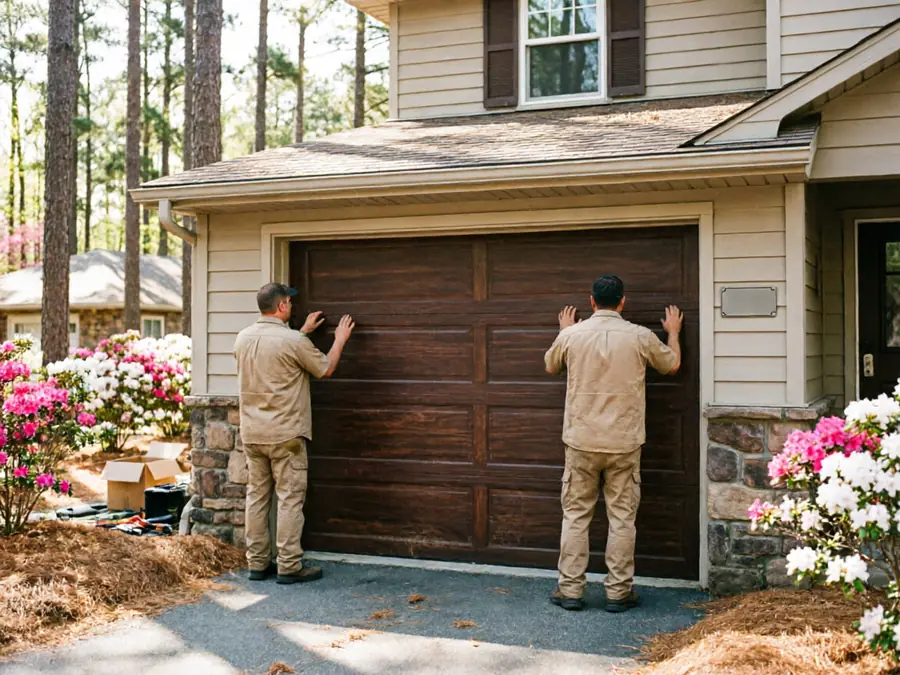
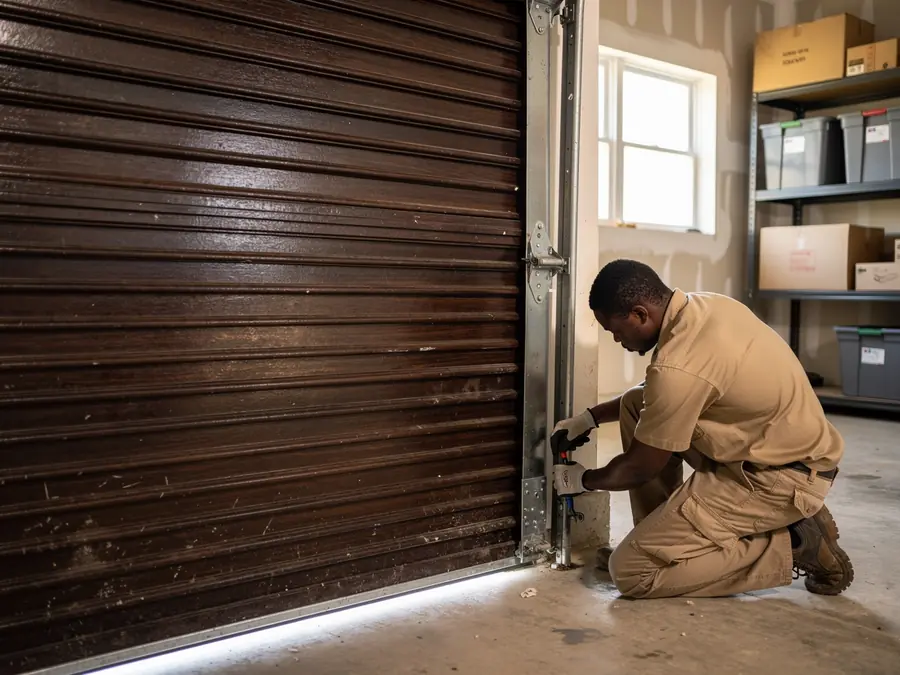
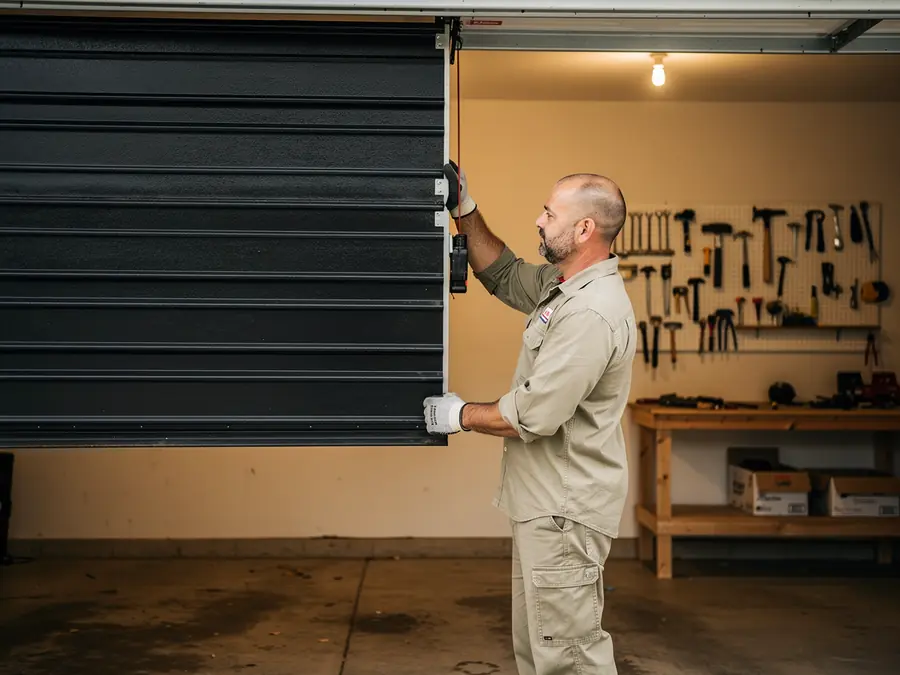
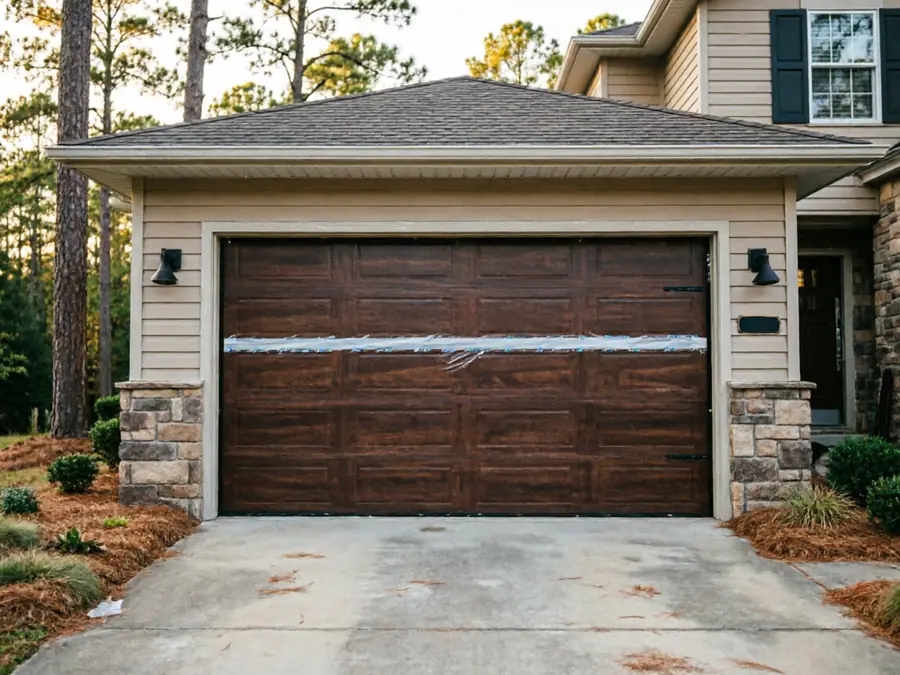
Edmonds sits in the same cold, moderate climate band as the rest of the service area we cover from Everett, and that matters more on an older panel than a new one. A 1973 steel section has no thermal break and no foam backing, so the inside face runs colder than the outside in winter. Moisture condenses on that cold inside skin, runs down behind the hinge brackets, and starts rust at the bottom seam of the section years before the rest of the panel shows wear. Panels installed in 1973 lack a thermal break, so Edmonds' older stock shows more rust and seam warping under the area's cold, moderate winters than panels on newer builds nearby.
On a newer insulated door, that same moisture mostly stays on the outer skin where it does less damage. That's the real reason a panel on an older Edmonds house fails before a panel of the same age on a newer design would - it's not the steel gauge, it's the missing insulation layer behind it.
We see this most on north-facing doors that don't get afternoon sun to dry the panel out between wet spells. If your door's a single-layer steel panel from that era, the bottom section is the one to watch first.