
Pre-standardization panel era
That decade and a half matters because it's the difference between a door built during the first wide rollout of steel sectional panels and one built after manufacturers standardized sizing and finish.
Snohomish, Everett
Garage door panels on 1975-era Snohomish homes often don't match current manufacturer stock. We travel 5 miles from Everett to repair, match, or replace them.
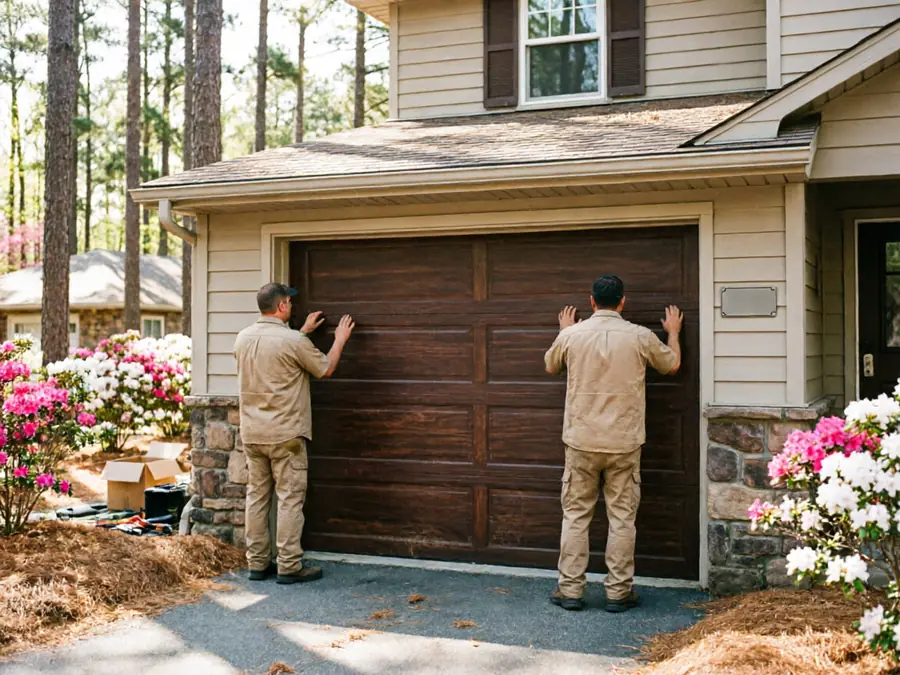
Booking
There's no Everett Garage Door Pros branch sitting in Snohomish - we run this job from Everett, five miles away, so booking means a truck coming to you rather than a shop you drop into.
When you call, tell us the door's rough age and what the panel is doing: a split seam near the bottom roller, a dent that's folded the steel inward, or hardware pulling loose from the panel face. That's more useful to us than a brand name, because a lot of doors here were installed before anyone kept that paperwork.
If you want to see what else we cover out of Everett before you book, the service-area page for Snohomish has the rundown, and our main panel page for Everett itself goes into the repair process in more depth.
For Snohomish specifically, the thing we ask every caller is how long the damage has been there - a panel that's been cracked through a winter often brings a second problem with it by the time we arrive.
Pricing
We don't post a flat number for panel work here, because what a Snohomish panel job costs depends on whether we're matching one section on a 1975-built door or replacing the whole run because the embossing pattern was discontinued years ago. Snohomish's median household income, at $84,688, runs well under the $116,095 median across the rest of the service area we cover from Everett, and that gap shows up in the calls we get - more homeowners here ask us to patch a single panel instead of swapping the full door, and more of them want the repair priced before we start cutting anything loose. We'll always tell you straight when a single-panel match isn't worth doing - sometimes the better number is the one you don't spend on a mismatched patch that fails again in two years.
The repair
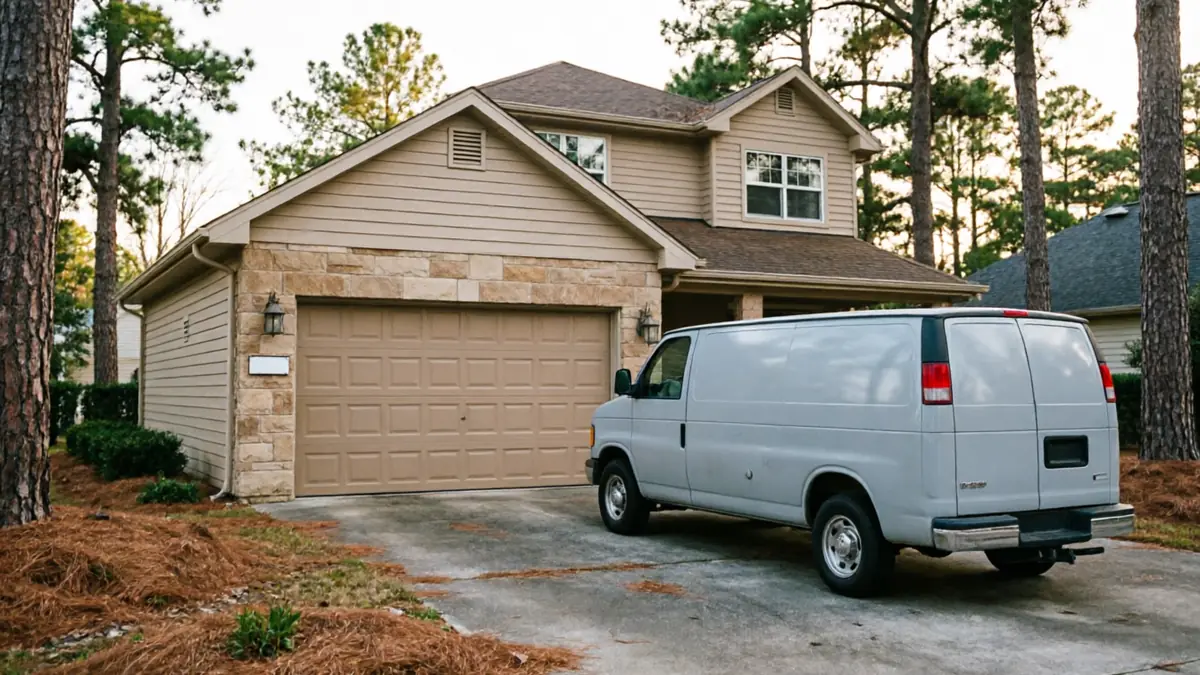
Snohomish's housing stock centers on a median build year of 1975, well ahead of the 1990 median across the broader area we serve from Everett.
That decade and a half matters because it's the difference between a door built during the first wide rollout of steel sectional panels and one built after manufacturers standardized sizing and finish.
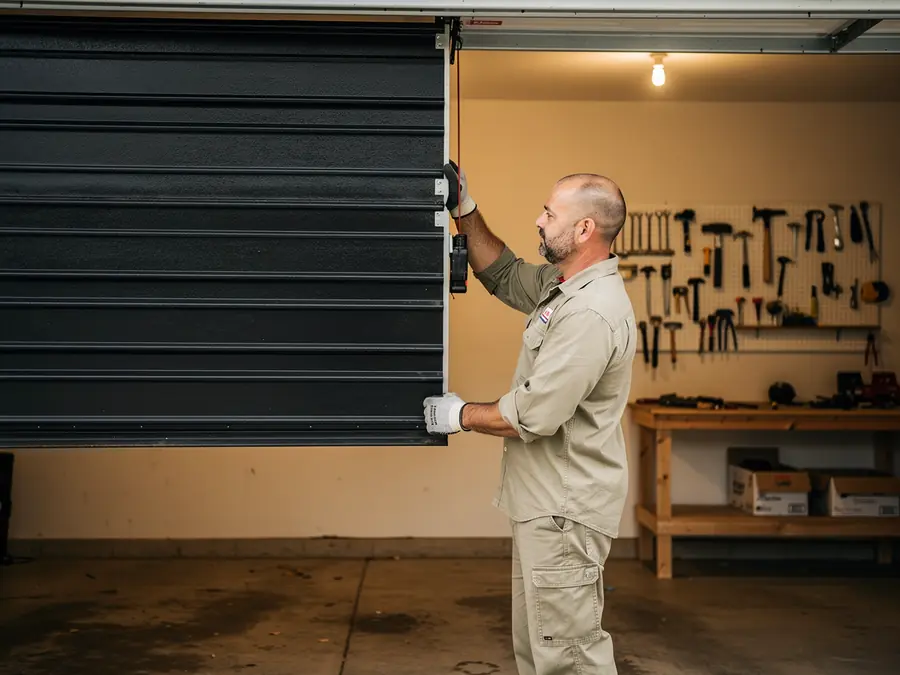
On a 1975 door, the panel dimensions and the embossing grain often don't match anything currently stocked, so the job starts with measuring the exact section - height, width, and rib pattern - before we know whether a replacement panel exists or whether the whole door needs to come off.
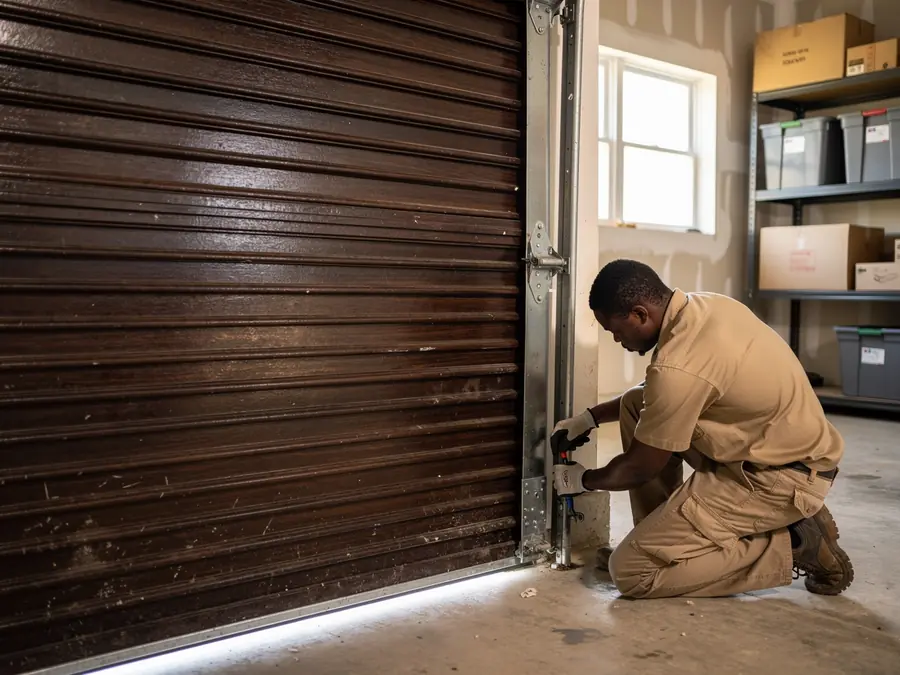
If a match exists, swapping one or two sections is a half-day job: pull the damaged panel, free the end hinges, set the new piece, reseat the track rollers. If it doesn't, we're talking full door replacement, which is a different conversation and a different job.
Local causes
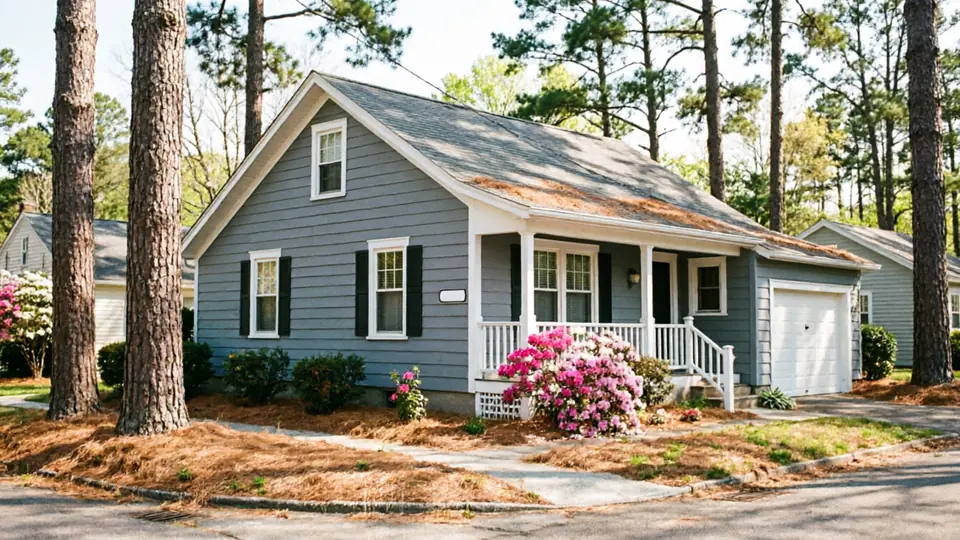
Snohomish sits in the same cold-moderate climate band as the rest of the area we run trucks through, and on a door built around 1975 that climate does specific damage. The steel used in that era is thinner than what's sold now, with little to no insulation backing, so it expands and contracts more across a winter freeze-thaw cycle than a modern panel does. That movement works the rivets loose at the hinge points first, then the panel starts to bow slightly at the center - not enough to notice walking past it, but enough that the next hard knock, a backed-in bumper or a wind-caught basketball, finishes the job. With roughly 4,426 households in Snohomish, that first wave of steel panel doors still accounts for a real share of what's standing, which is why we see this particular failure pattern here more than elsewhere.
DIY or pro
Swapping a single garage door panel looks simple from a video - unbolt, unhook, rebolt - and sometimes it is, if you can find the exact panel.
The part most people underestimate is sourcing: a 1975-era panel with a discontinued embossing pattern isn't sitting on a shelf at a hardware store, and ordering the wrong width means you've bought a piece that won't seat flush against its neighbors.
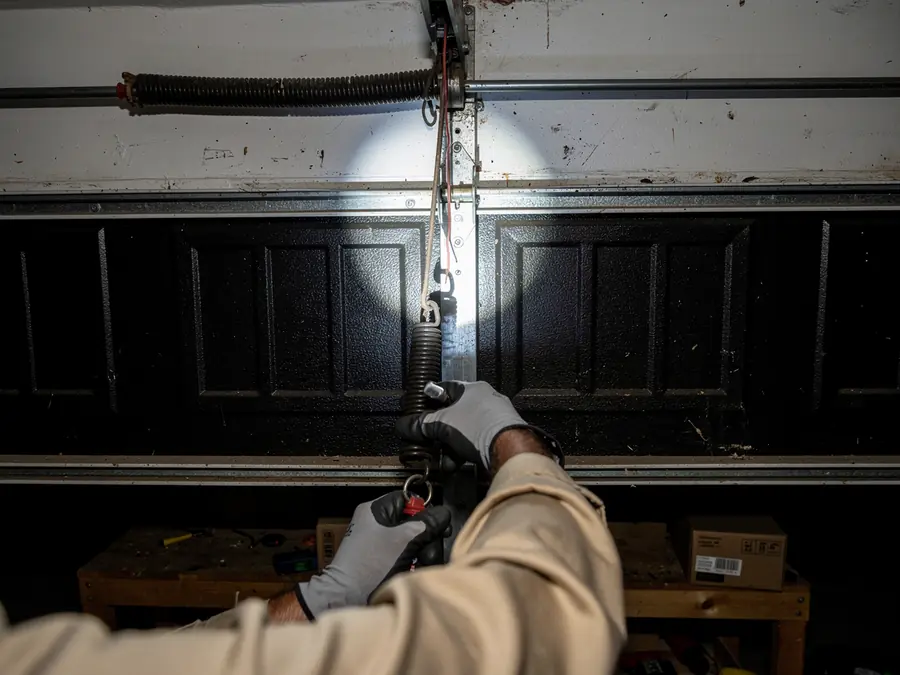
There's also the torsion spring sitting under tension right above where you're working, and that's not a place to improvise. If you've already got a confirmed match in hand and it's a non-insulated single panel with no spring access needed, it's a reasonable weekend job.
Anything involving the bottom panel near the spring system, or a door where you can't confirm the panel still exists for sale, is where we'd tell you to stop and call rather than force a mismatched piece into place.
Questions
Most Snohomish homes date to around 1975, and panel styles from that era were rarely standardized across manufacturers the way current doors are. The embossing pattern, panel height, and track spacing on an older door often don't match anything currently produced, so ordering online without measuring first usually means returning a piece that won't fit.
It depends on whether a matching panel still exists. If it does, a single-section swap is usually the lower-cost route. If the pattern is discontinued, forcing a mismatched panel onto an otherwise original door often costs more in labor and still looks wrong, so full door replacement can end up being the better value.
No. We run this work out of Everett, about five miles away, and come to you rather than having you bring the door in. Booking is the same either way - tell us the damage and the door's approximate age when you call.
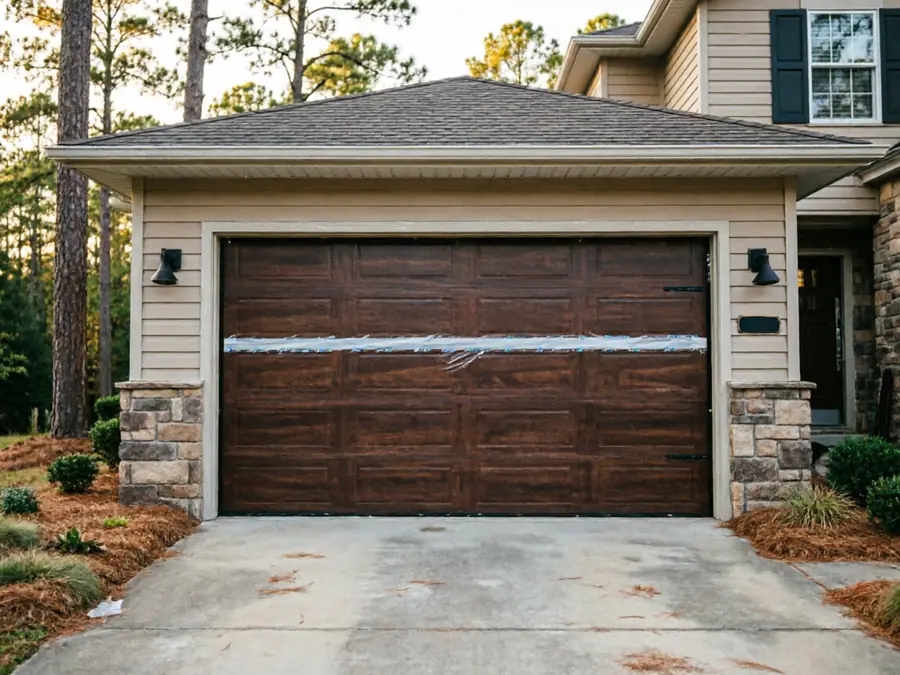
A dent that hasn't cracked the steel or pulled a hinge loose is usually cosmetic. If the panel bows when the door is closed, if hardware screws have backed out of the steel, or if you can see daylight through a seam, that's structural and it affects how the door tracks - worth a look before it gets worse.
Explore more
Ready when you are
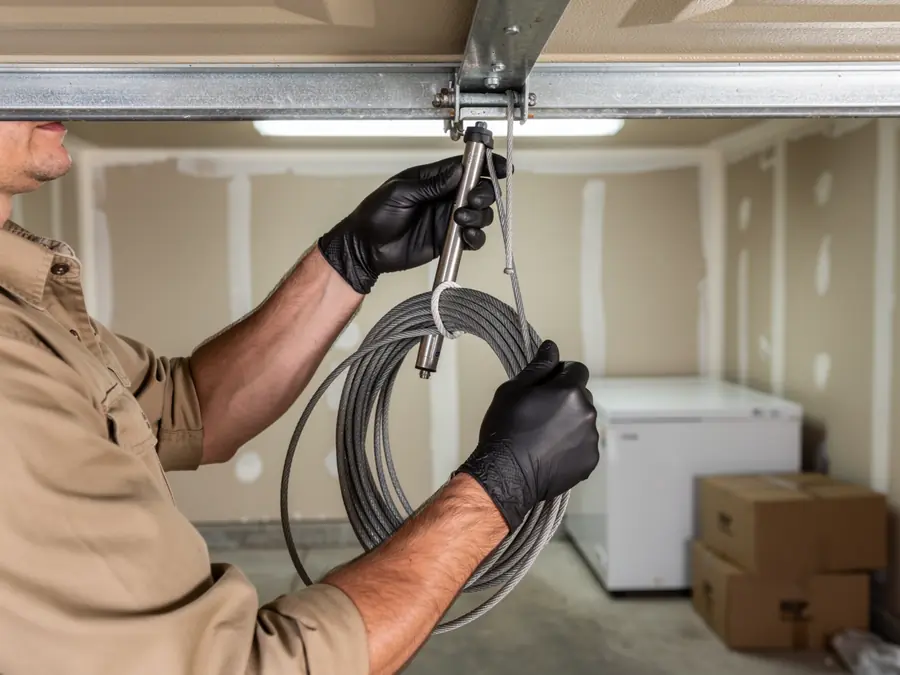
Everett Garage Door Pros repairs and installs garage doors, springs and openers in Everett, WA and the surrounding area.